Mt. Tabor Pond Slope project is my own Rutgers Environmental Stewards Project
2/2026
By Christina Wu Bunzendahl
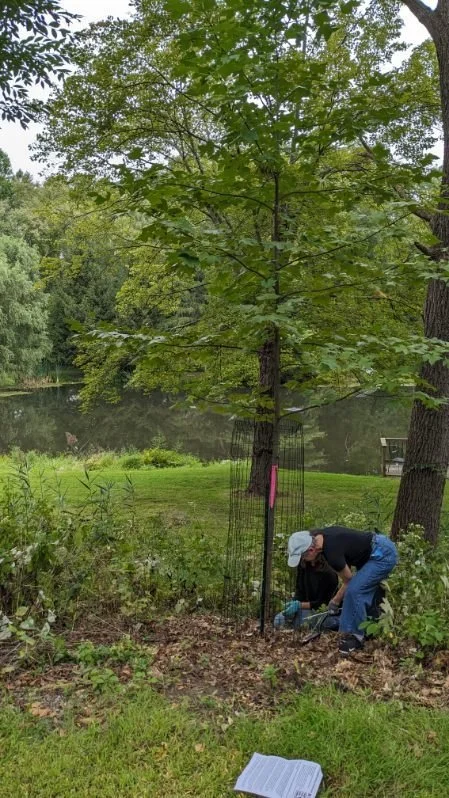
Image of pond slope area with Garden Club x Grow Your Own Forest Project collaboration on site
The Mount Tabor pond slope project is my own Rutgers Environmental Stewards project, started in 2025 with an initial flora and fauna inventory as well as a forest health assessment. The restoration area is a 100ft x 30ft slope between the volleyball court and the pond. The area has a wide diversity of sapling and mature trees native to northern New Jersey, but the majority of ground-level plants are invasive. The invasive plants, such as wineberry, Japanese knotweed, Japanese stiltgrass, and Phragmites (Common Reed) prevent the growth of plants that are native to New Jersey from establishing and growing on the slope, and they do not provide adequate cover or food for macro-fauna such as birds, mammals, and reptiles. The good news is that there are a number of native plants growing in the same area as well including Black walnut, Red maple, American Elm, White Ash, Skunk cabbage, and Native blackberries. I also made an initial effort to remove the Japanese knotweed, which is extremely persistent, difficult to remove even with chemical means, and may take multiple years to completely eradicate. I also worked with the Boys Scouts to manually dig out some of the thorny and prickly wineberry vines.

Image of trees flagged for preservation along pond edge.
Together with the Garden Club and our town manager, Kyle, we decided that line of sight should be maintained from the volleyball court down to the pond, so I will make sure that the native plants I use for restoration preserve that human desire to see the water and are aesthetically pleasing. One of the additional challenges of this project area is that the upper portion of the slope is quite dry, while the bottom floods in the spring, creating very different growing conditions. I will need to consider deer-resistant native plants for both wet and dry soils. The project will also include several presentations to the community about native gardens and the importance of woodland restoration. The timeline for the restoration encompasses 3 years: with 2025 being the assessment year, 2026 and 2027 will be more intensive with invasive species removal and replanting with native species. In 2027, I plan to do another flora and fauna inventory to see if removing the invasive species really did increase macro-fauna biodiversity and forest resilience, as anticipated.
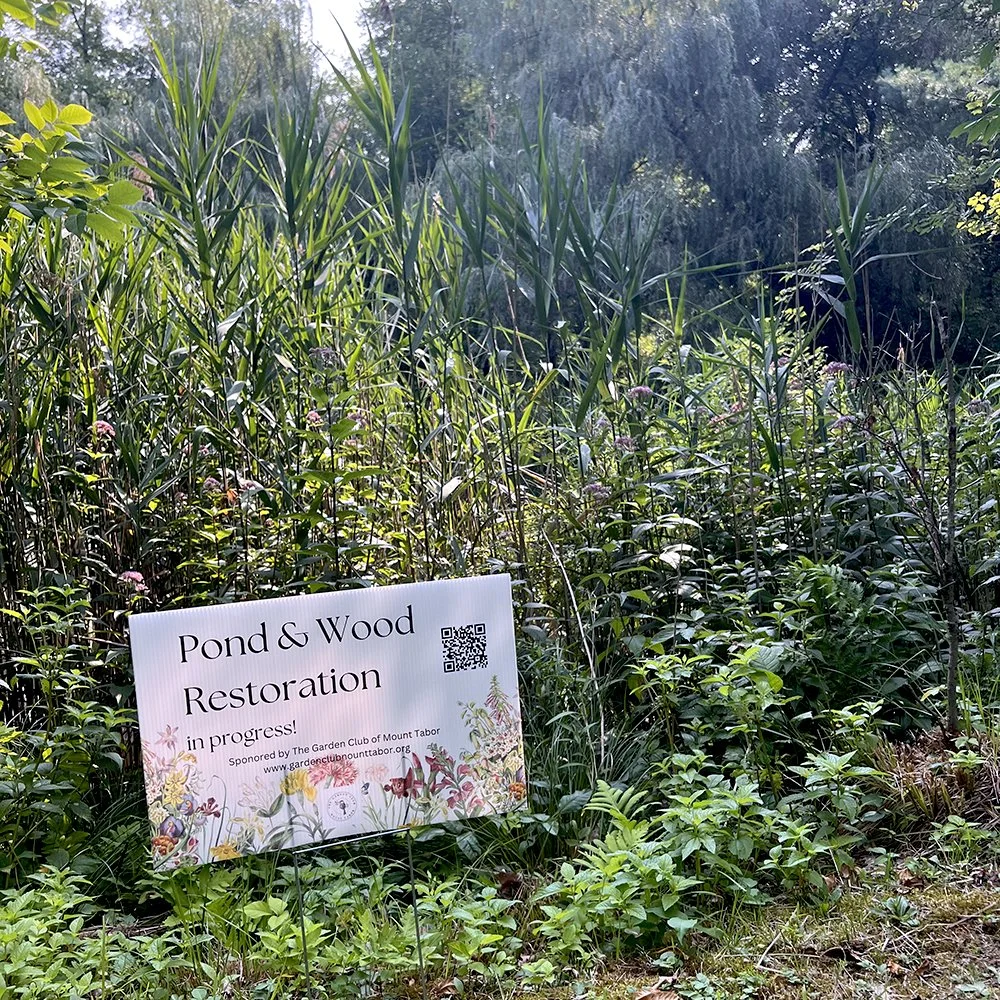
Image of signage marking out some areas under restoration.
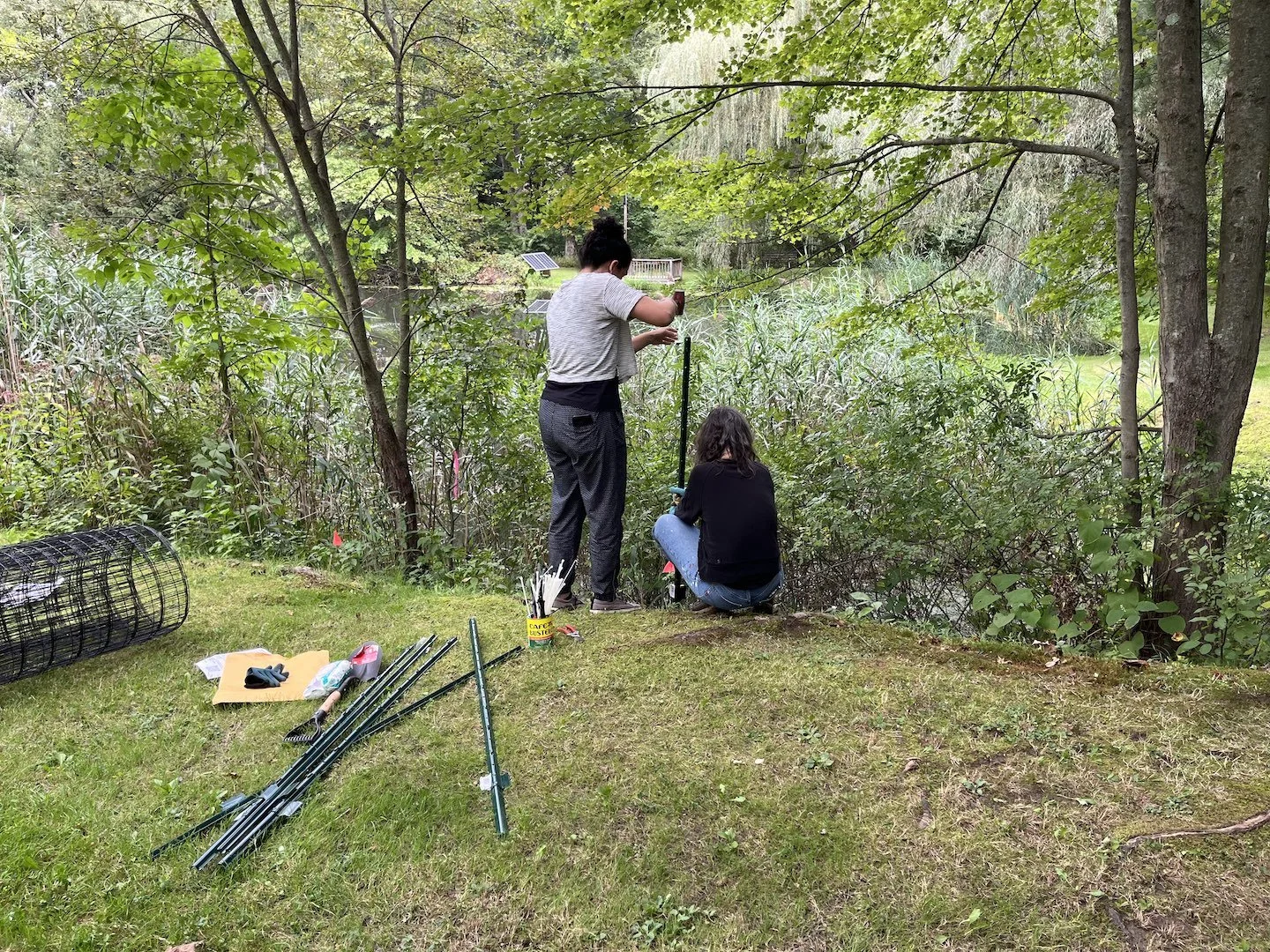
Image of pond slope restoration.